Diet & Weight
The Pattern Behind Food Choices and Gradual Weight Change
Eleanor Whitfield·
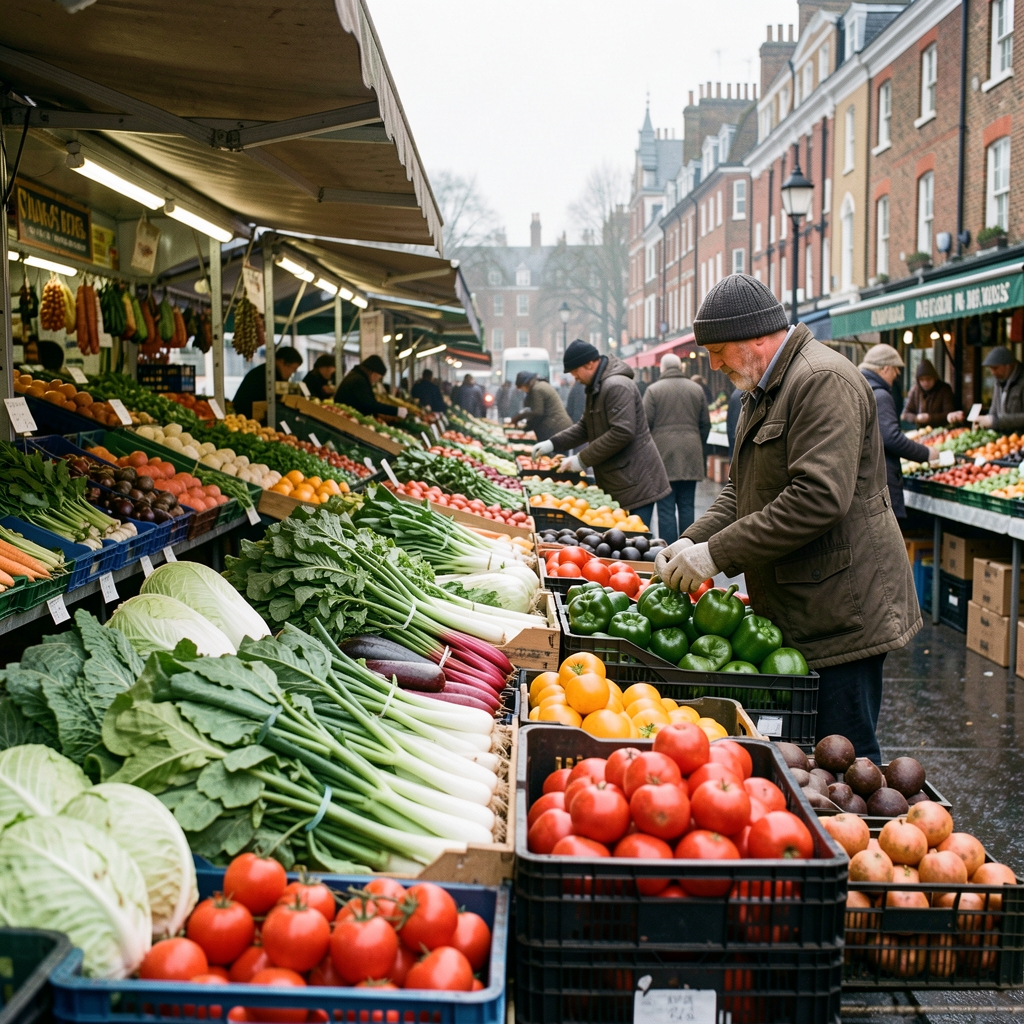
A January market and a July market are different places entirely. The range of vegetables available in midwinter is narrow compared with the abundance of summer; this is not merely an aesthetic observation but a nutritional one. The seasonal calendar governs the variety of plant foods available at their most nutritionally intact, and a weekly eating record that takes account of this calendar will look quite different across the months.
The record described here was kept over six consecutive weeks spanning late autumn into early winter. The brief was simple: note every vegetable and piece of fruit that appeared in a meal, across every day, without adjustment or curation. The resulting document was not a nutritional masterpiece. It was an honest account of what a working person eats when they are moderately attentive to food quality but not perfectionist about it.
In the first two weeks, the record revealed a pattern that is probably common to many people working in cities: a reasonably varied intake at evening meals, where deliberate cooking occurred, combined with a quite narrow midday intake — frequently a sandwich with one or two components, occasionally with a piece of fruit added as an afterthought. The morning meal contained almost no vegetables at all in the first week. This asymmetry — rich evenings, sparse middays, absent mornings — is worth naming because it shapes the weekly total quite significantly.
By the fourth week, having become more conscious of the morning gap, small shifts had begun: wilted spinach alongside eggs, a tomato sliced and added to whatever was being assembled in haste. Not a transformation — a small adjustment. The record reflected these changes, and the variety count per week rose modestly.
There is a straightforward reason to favour seasonal produce beyond flavour, and it relates to the interval between harvest and plate. A vegetable consumed within days of picking, from a local grower or a well-supplied market, retains more of its water-soluble nutritional content than one transported across several thousand miles and stored in refrigerated conditions for a week before purchase. This is not a radical claim — it is a fairly ordinary observation about the chemistry of food.
In practice, this means that a cabbage bought from a grower who harvested it that morning is nutritionally different from the same cabbage variety bought from a large retailer. The difference is not always dramatic, but it is real, and it compounds over a weekly eating pattern. A person whose diet is predominantly built from seasonal, locally sourced produce — whatever that looks like in their specific geography — is working with a nutritionally denser raw material than one whose diet relies predominantly on long-stored, long-transported ingredients.
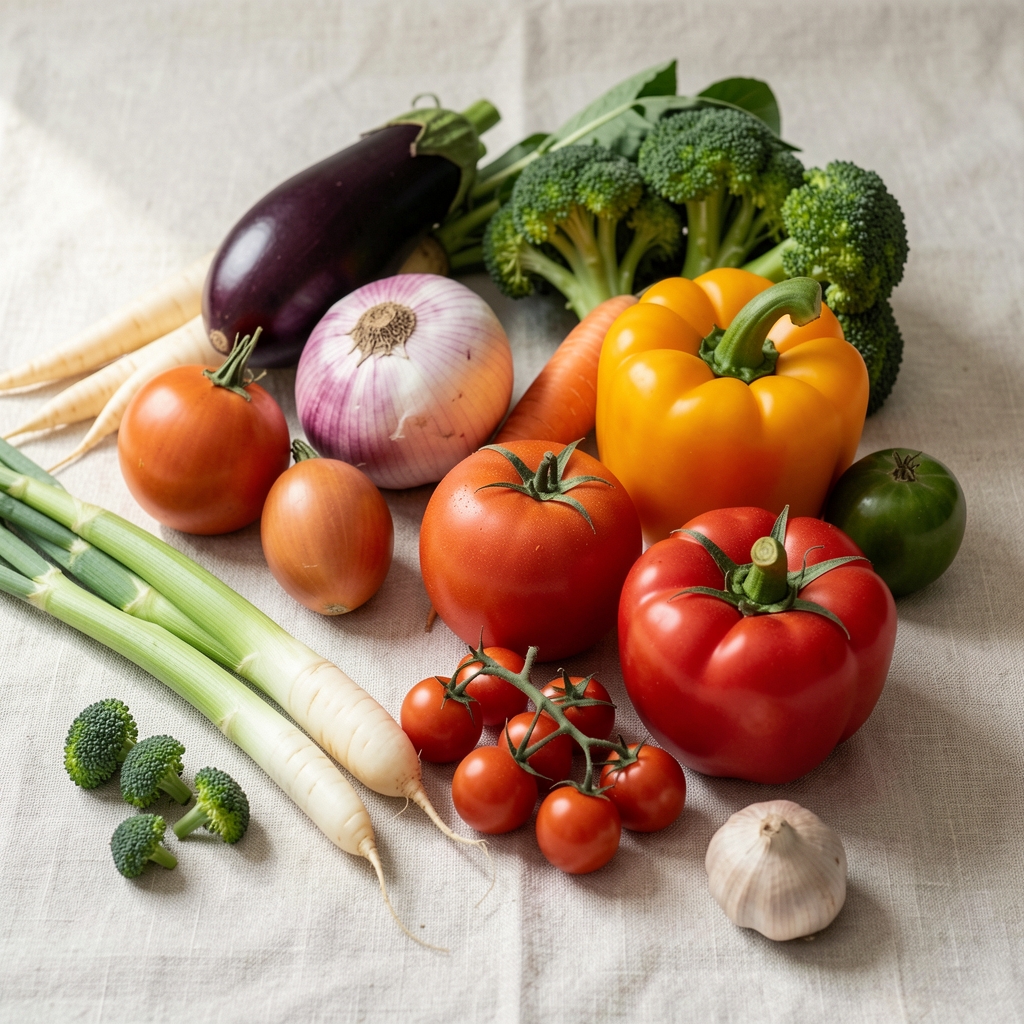
For the autumn and winter record, the available seasonal range included: root vegetables of several varieties, brassicas, leeks, celery, stored squash, late apples and pears, citrus fruits from warmer climates, and dried pulses that had been harvested earlier in the year. This is a substantial range, and the record showed that it was being used only partially. Several vegetables appeared weekly; others that were readily available — celeriac, kohlrabi, beetroot — appeared rarely or not at all.

Fig. 2.1 — Seasonal root vegetables, autumn record
The relationship between a varied intake of plant foods and weight awareness is less direct than popular writing often implies, but it is real. Vegetables and fruit support a sense of fullness between meals primarily through their fibre content, which slows digestion and extends satiety. A plate that is half vegetables — varied in colour, texture, and variety — will tend to produce a different experience of fullness than an equivalent-calorie plate with less plant matter and more refined starch or fat.
This is not a directive for any specific ratio of foods. It is an observation about how fibre interacts with hunger, and it has practical implications for the weekly food rhythm. When vegetables and fruit are genuinely central to the daily diet — not garnish, not afterthought, not a salad leaf on the side — the overall eating pattern tends to accommodate a natural regulation of intake that does not require counting or measuring.
In the six-week record, the weeks with the most varied plant intake were also the weeks in which evening snacking was least frequent. This is a correlational observation from a single record, not a universal finding, but it is consistent with what the broader nutritional literature describes: greater dietary variety, particularly among plant foods, appears to relate to a more stable pattern of hunger and fullness across the day.
"Seven vegetables. One week. A record of what the plate actually contained, rather than what it was assumed to contain."
Increasing plant variety in a weekly eating pattern does not require a reorganisation of cooking habits. It requires, primarily, a broader shopping list and a willingness to cook with ingredients that feel unfamiliar. Celeriac, which sounds forbidding, has a mild flavour and roasts beautifully alongside root vegetables that are entirely familiar. Cavolo nero, which looks austere, softens quickly in a pan and works in almost any context where spinach or chard would appear.
The barriers to plant variety are mostly attentional rather than practical. A person who shops from habit will buy the same vegetables week after week — courgette, carrot, broccoli, pepper — because those are the items that appear without deliberation. Introducing one unfamiliar vegetable per week, obtained from a market stall where the seller can describe how to use it, is a sufficient pace of change for the habit to establish itself.
Over six weeks, the record showed that three new vegetables had been introduced, each appearing multiple times after the first use. The momentum of variety, once initiated, tends to sustain itself: a person who has learned to cook celeriac will continue to buy it when it appears at the market. The week's eating broadens incrementally, and what was once unfamiliar becomes part of the ordinary repertoire.
Fruit received less attention in the record than vegetables, partly because it tends to appear as an unaccompanied item — eaten between meals, in transit, without preparation — and is therefore less consciously noted. But the six-week document revealed consistent patterns: three or four pieces of fruit per day during the first two weeks, dipping to one or two in weeks three and four when the supply of interesting fruit at the regular market was lower.
This variation tracked the seasonal availability of fruit more closely than the variation in vegetable intake. When a market has Cox apples in their peak season alongside a good supply of citrus and the last conference pears, it is easy to eat varied fruit. When the same market is offering primarily stored Braeburns and imported bananas, the incentive to pick up fruit feels lower. The quality of the seasonal offer shapes intake in ways that are invisible unless the record makes them visible.
The practical implication is that fruit intake may be better supported by proximity and variety than by intention. Having a bowl of fruit visible in the kitchen, changing its contents with the season, and buying from a source that offers variety rather than uniformity — these are structural changes that support intake without requiring ongoing decisions.

Eleanor Whitfield is a primary editor at Boranev Quarterly with a background in food journalism and nutritional writing. Her field records on seasonal produce and daily food rhythm have been a consistent feature of the publication since its founding.
More from Eleanor Whitfield →